



WildRobin Withdrawal Complaints: How to Assess the Risk
 Available in GB
Recent public review searches contain repeated WildRobin complaints about slow, cancelled or difficult withdrawals. That pattern matters because it tells a prospective player where operational risk is being reported. It does not, by itself, prove that WildRobin generally refuses to pay, that every complaint is accurate, or that any individual delay was improper.
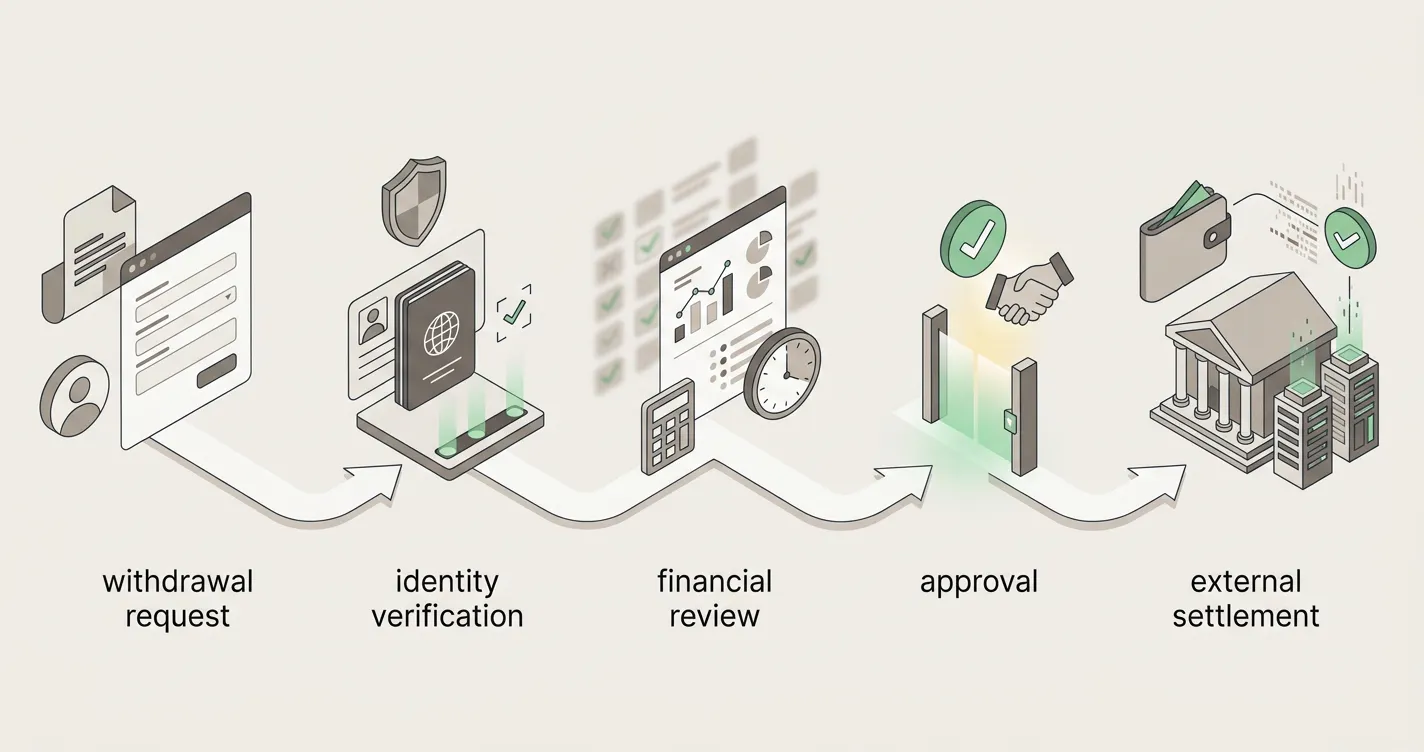
The strongest way to assess the concern is to compare dated user reports with WildRobin’s current written process. The General Terms, version 1.12 dated 19 August 2026, state that withdrawal requests are worked through by the financial department within three business days when the relevant conditions are met and checks are complete. The same Terms allow delays for identity, account, source-of-funds and compliance checks. That gap between reported experience and written process can be assessed through a practical risk framework.

Table of Contents
- Why the withdrawal complaints deserve attention
- What WildRobin’s current Terms actually say
- A six-point test for evaluating a withdrawal complaint
- What can legitimately extend a withdrawal process?
- Red flags that make a complaint more decision-relevant
- How to document your own case
- A practical escalation sequence
- KYC and withdrawal complaints are closely connected
- What this complaint pattern means for a prospective player
- References
- How to use withdrawal complaint evidence before depositing
- Frequently asked questions
Why the withdrawal complaints deserve attention
Recent WildRobin reviews visibly include repeated claims that withdrawals remained pending for longer than expected, were cancelled, or required repeated contact with support. Some reviewers describe eventually receiving funds after a delay, while others say their cases remained unresolved when they posted. A recurring theme across unrelated reviews is more useful than one isolated complaint because it identifies an area that deserves closer investigation.
That still does not turn the allegations into verified operating facts. Review platforms do not normally provide an outside reader with the full account ledger, payment-provider record, KYC file, bonus status, fraud checks or complete support correspondence. A reviewer can be entirely sincere and still lack information about what happened behind the scenes. Conversely, a written policy does not prove that every case was handled according to that policy.
The evidence supports a measured reading: WildRobin has a visible withdrawal-complaint pattern in recent review results, and that pattern is a legitimate decision signal. It is not evidence for the blanket claim that the casino “does not pay”. For the broader reputation picture, including how to read aggregate ratings, see the WildRobin reviews.
What WildRobin’s current Terms actually say
The current General Terms provide a concrete reference point. They say the financial department works through withdrawal requests within three business days after a request is made, or after the previous withdrawal request is paid, provided all other conditions are met and checks are completed. They also state that payment-provider delays after the financial department has worked through the request are outside the operator’s stated processing stage.
The Terms also reserve the right to delay processing while checking identity, account balance, source of funds and compliance with the Terms. KYC provisions say WildRobin can request evidence of identity, residence and ownership or transaction history of payment methods. The Terms say verification is usually completed within 10 days after a verification request has been answered in full, while allowing additional time in more complex cases.
Those two clocks answer different questions. The three-business-day statement describes the financial department’s handling of a withdrawal subject to completed checks. The verification statement describes a KYC review after the requested information has been supplied in full. A complaint that says “I waited seven days” is therefore incomplete unless you also know whether the account was fully verified, whether new checks were requested and when those requests were satisfied.
For the mechanics of making a withdrawal, payment-method considerations and the difference between internal processing and external settlement, use the separate WildRobin withdrawals.
A six-point test for evaluating a withdrawal complaint
1. Exact submission date
Start with the date and time the withdrawal was requested. “A long time” is much less useful than a dated sequence. Business-day wording also means weekends and public holidays can matter when comparing a complaint with the operator’s financial-department timetable.
2. Verification status
Ask whether KYC was already complete before the request, whether additional documents were requested after the withdrawal, and when the user supplied them. A fully verified account and an account entering its first source-of-funds review are not equivalent situations.
3. Amount and payment route
The amount and payment method can affect how a case unfolds. The Terms allow the operator to use a different payment system in some circumstances and separate the casino’s internal processing from later payment-provider settlement. Do not assume a bank transfer, card refund and another payment route will have identical downstream timing.
4. Stated reason for the delay
A useful complaint records what support or the cashier actually said. Was the request under financial review, waiting for KYC, rejected by a payment route, cancelled for a terms issue or simply shown as pending? Different reasons need different evidence.
5. Support trail
Look for dated emails, chat transcripts or case references rather than repeated descriptions of frustration. A support trail can show whether the explanation changed, whether documents were acknowledged and whether the customer was given a specific next step.
6. Eventual outcome
A review written while a case is pending may not show the final result. Some recent reviews have later been updated to say a withdrawal arrived after a lengthy wait. That does not erase the delay, but it changes the factual description from “unpaid” to “paid late”. When possible, give more weight to reports that include the final outcome.
What can legitimately extend a withdrawal process?
The current Terms identify several categories that can extend or interrupt a straightforward cash-out. Identity verification can be requested before or after deposits and withdrawals. The operator can also perform checks concerning account balance, source of funds and compliance with the Terms. If the requested material is incomplete, the verification clock is not the same as a fully answered request.
Payment routing can introduce another stage. The operator’s financial department can complete its work before the receiving bank or payment provider finishes settlement. That distinction matters when a review says the casino marked a payment as processed but the money did not immediately appear.
None of these possibilities should be used as a universal excuse for every delay. They are simply plausible process explanations supported by the written Terms. A strong complaint analysis asks which explanation applies to the particular case and whether the dates support it.
Red flags that make a complaint more decision-relevant
A complaint becomes more concerning when it includes a clear, documented timeline that extends materially beyond the operator’s stated process without a specific unresolved verification step. Repeated unexplained cancellations, contradictory support explanations, or a refusal to identify what information is still required can also make a report more useful to a prospective player.
Another important signal is repetition across separate users during the same operating period. If several recent reviewers independently describe similar payout delays, that does not prove a common cause, but it increases the value of treating withdrawal speed as a risk factor in your decision.
By contrast, an undated one-line accusation, a complaint that omits whether a bonus was active, or a post that labels the site illegal without citing a regulator has low evidential value. Strong language is not the same as strong evidence.
How to document your own case
If you have a pending WildRobin withdrawal, create a simple record before repeatedly contacting support. Note the withdrawal amount, submission timestamp, payment method, current status and any withdrawal identifier visible in the account. Save confirmation emails and dated account records that show the timeline, while redacting sensitive payment details if you share them outside support.
If KYC is requested, keep a list of what was requested, when you uploaded each item and when the operator acknowledged receipt. The current Terms say verification is usually completed within 10 days after a request is answered in full, so the date of a complete response is more useful than the date the first document was sent.
For support contacts, write down the date, channel and summary of each answer. WildRobin advertises 24/7 live chat and email support. If a chat conversation addresses a withdrawal, keep the transcript or a dated record where possible so you can refer back to the exact explanation instead of relying on memory.
A practical escalation sequence
- Check the account first. Confirm that the request is still pending and that there is no unresolved verification notice, rejected payment route or action required from you.
- Compare the dates with the Terms. Separate business days from calendar days and distinguish financial-department processing from a KYC review or downstream payment settlement.
- Contact support with one complete timeline. Give the withdrawal date, amount, method, KYC status and any case reference. Ask what exact step is outstanding.
- Use written complaint channels when needed. The current Terms list [email protected] for customer service and describe a written complaint route if the initial response does not resolve the issue.
- Keep your evidence together. Store messages, dated status records and document-request dates in one place. A chronological record is more useful than multiple disconnected contacts.
This is practical documentation guidance, not a promise that a particular external dispute route is available. No WildRobin UK Gambling Commission licence was verified in the register check, so WildRobin complaints should not be assumed to fall within UKGC licensee complaint procedures or UKGC consumer-protection coverage. See the licence and UK context page for that distinction.
KYC and withdrawal complaints are closely connected
Many withdrawal disputes become difficult to interpret because the payment request and identity review happen at the same time. WildRobin’s Terms allow KYC before or after deposits and withdrawals and permit checks of identity, residence, payment-method ownership and source of funds. Those are material conditions, not a minor administrative detail.
If your main concern is what verification can involve and how to prepare a clean evidence trail, use the dedicated WildRobin KYC. Keeping that topic separate prevents a withdrawal complaint from being reduced to either “KYC explains everything” or “KYC is always an excuse”. The actual question is whether the requested checks, dates and communication make sense in the individual case.
What this complaint pattern means for a prospective player
If fast, predictable access to withdrawals is one of your highest priorities, the visible concentration of recent payout complaints should lower your comfort level. You do not need to prove misconduct before deciding that a reputation pattern is too much risk for you personally.
If you still consider using WildRobin, the cautious approach is operational rather than emotional: read the current withdrawal and KYC rules before depositing, avoid depositing more than you are comfortable leaving tied up during checks, keep account information accurate, and save documentation from the start. Treat stated processing times as reference points, not guarantees of bank-account arrival at a fixed hour.
Also keep the licensing question separate from the complaint question. No WildRobin UKGC licence was verified in the current UK Gambling Commission register. That fact affects the regulatory context for Great Britain, but it does not prove whether a specific reviewer was paid correctly or incorrectly. Likewise, a user complaint cannot substitute for a regulator-register check.
References
- Current WildRobin Trustpilot profile for recent user-review themes and dated complaint examples.
- WildRobin General Terms and Conditions for the current withdrawal, verification and complaints procedure wording.
How to use withdrawal complaint evidence before depositing
WildRobin has a visible pattern of recent public complaints about withdrawal delays and cancellations. Treat that as a genuine reputation risk signal, not as proof of a universal failure to pay. The best assessment compares each complaint’s dates, KYC status, stated reason, support trail and final outcome with the current written process. If the pattern itself is outside your risk tolerance, that is already useful decision information.
For the full brand assessment, return to the WildRobin UK review.
Frequently asked questions
Are WildRobin withdrawal complaints proof that the casino never pays?
No. Recent reviews contain repeated payout-delay complaints, but user reports are anecdotal and do not establish a universal non-payment practice. Some reviews also describe eventual payment after delays.
What processing time does WildRobin state?
The current Terms say withdrawal requests are worked through by the financial department within three business days when the stated conditions are met and checks are complete. That is not the same as a universal promise that money reaches the receiving bank within exactly three business days.
Can KYC delay a withdrawal?
Yes. The current Terms allow identity, account, source-of-funds and compliance checks and say verification is usually completed within 10 days after a request has been answered in full, with extra time possible for more complex cases.
Should I rely on a review that calls WildRobin a scam or illegal?
Such a label should not be treated as established fact. Use reviews for sentiment and recurring themes, then check operational rules in current Terms and licensing questions in the relevant regulator register.
Published by the WildRobin Casino team.